Sirius Trio to perform at Avondale College

Sirius Chamber Ensemble are delighted to be performing for Avondale College of Higher Education on Tuesday 24th September. A selection of solo works, duo and trios for clarinet, cello and piano will be performed. The program includes the virtuosic Le Grand Tango for cello and piano by Astor Piazzolla, a set of English bagatelles for clarinet and piano by Gerald Finzi, the Disco Toccata for clarinet and cello by Guillaume Connesson, as well as trio music by Beethoven and American composer, Robert Muczynski.

Performers: Ian Sykes (clarinet), Clare Kahn (cello) and Claire Howard Race (piano).

When: Tuesday, 24 September 6.30pm
Where: Avondale College Church
Avondale College of Higher Education
582 Freemans Drive
Cooranbong
For more information and tickets please visit the Avondale website

Leave a comment

Filed under Concerts

Singleton Arts Festival

On Saturday 27th July we took the ensemble to the Sacred Spaces Reception Room, Singleton to perform in the Upper Hunter Conservatorium of Music, 2013 Visiting Artists Series. We enjoyed performing for and meeting with the local chamber music enthusiasts. Special thanks to Adam Wills and Rebecca Erskine from the Conservatorium for inviting us to perform. We felt privileged to play in the series funded in part by Arts NSW, through the Regional Conservatoriums Grants Program. Thanks also to the Sisters of Mercy Convent for making us feel so welcome.

Sirius Chamber Ensemble on tour

Sirius Chamber Ensemble on tour

And what better way could there be to enjoy the day after the concert with seeing the sights of Singleton, and tasting local produce in the Upper Hunter.

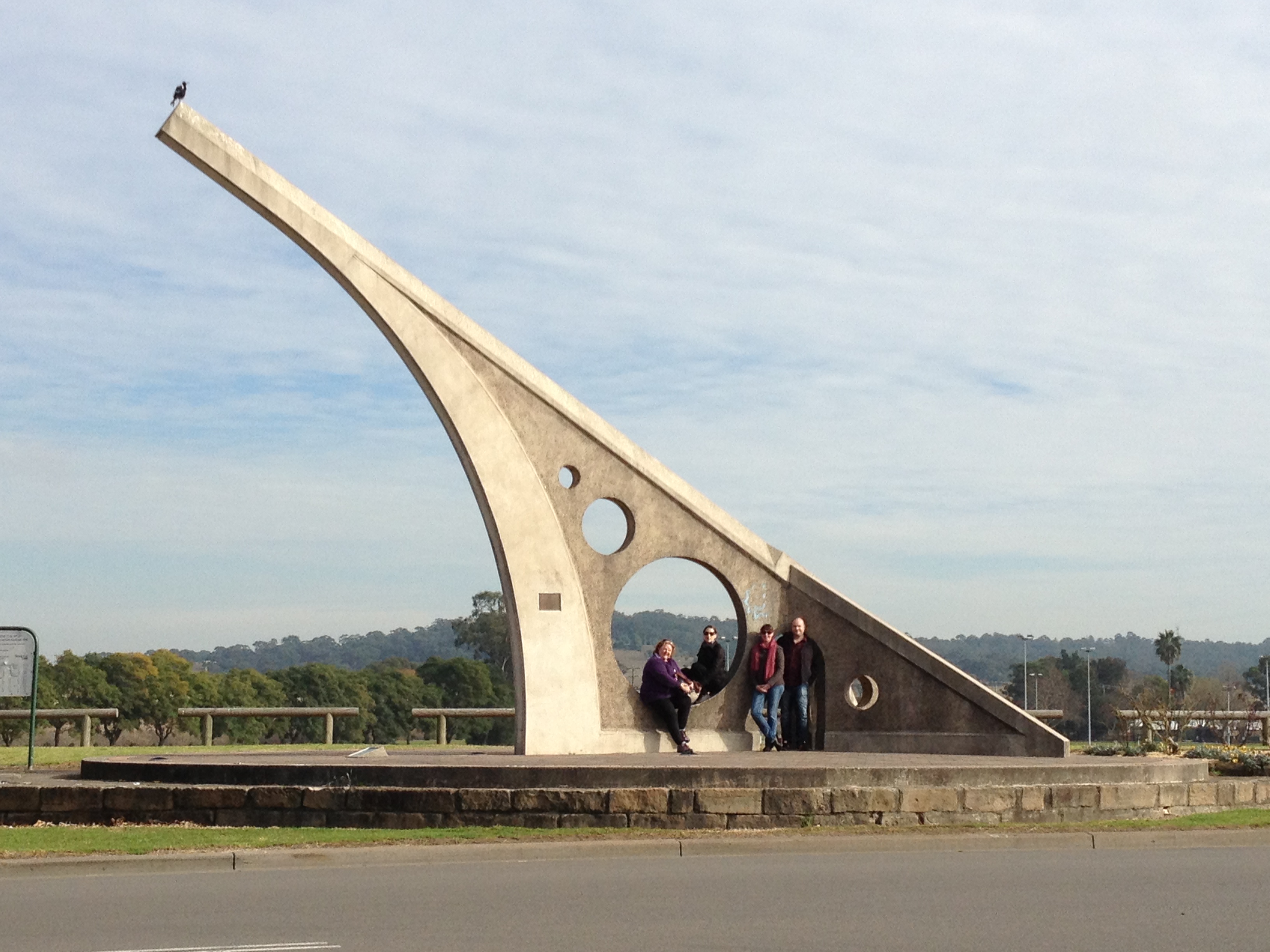
The World's biggest sundial in Singleton

The World’s biggest sundial in Singleton

Until next time we can tour we are busily at work preparing for The Americas concert this Saturday 10th August, 7.30 pm at St Philip’s Church. Program to include North American composers, Kenneth Fuchs and Robert Muczynski and from South of the border, Astor Piazolla and Julio Medaglia.


Scenic drive through wine country

Scenic drive through wine country

Leave a comment

Filed under Concerts

The Americas

America the Beautiful Country

Join Sirius Chamber Ensemble for a musical journey through the Americas. We will feature two compositions by US composer Robert Muczynski, Time Pieces for clarinet and piano and Fantasy Trio for clarinet, cello and piano. Kenneth Fuchs’ music for Quiet in the Land, an Idyll for flute, clarinet, cor anglais, viola and cello, suggests the open spaces of North America. A stark contrast follows with Argentinian composer Astor Piazolla with his virtuosic Le Grand Tango for cello and piano. To conclude is the joyous Belle Epoque in Sud America for wind quintet by Brazilian composer Julio Medaglia.

Program:

Muczynski – Time Pieces for clarinet and piano

Fuchs – Quiet in the Land, Idyll for flute, clarinet, cor anglais, viola and cello.

Piazolla – Le Grand Tango for cello and piano

Muczynski – Fantasy Trio for clarinet, cello and piano

Medaglia – Belle Epoque in Sud America for flute, oboe, clarinet, bassoon and french horn.

Performers:

Ian Sykes (clarinet), Alison Evans (bassoon), Melissa Coleman (flute), Angus Lindsay (oboe/cor anglais), Julia Zeltzer (french horn), Georgina Price (viola), Clare Kahn (cello), Claire Howard Race (piano).

When: Saturday 10th August, 7.30pm

Where: St Philip’s Church, York Street

Tickets: Adult $35 / Concession $25 / Child $15

Bookings: www.classikon.com

Leave a comment

Filed under Concerts

Sirius Chamber Ensemble to perform in Upper Hunter

We are looking forward to performing one of our Wind Quintet with Piano programs at the Upper Hunter Conservatorium of Music. The program will include Beethoven’s Quintet for piano and winds, Francis Poulenc’s Sextet for piano and winds, Julio Medaglia’s South American dance suite “La Belle Epoch in Sud-America” for wind quintet, and Australian music by Kristofer Spike.

Saturday 27 July at 5pm

Singleton Sacred Space Reception Room

Tickets: $20 Adult $15 Concession

See the event program here

2 Comments

Filed under Concerts

Homeland and Victory

Sollertinsky (right) with close friend Dmitri ...

Sollertinsky (right) with close friend Dmitri Shostakovich (Photo credit: Wikipedia)

It may seem that the three pieces that we have chosen for our first concert this year – Saturday 25 May – a little melancholy. All three compositions were written either during the Second World War or written in a significant time of the composer’s life. These were grave days but underneath their political and emotional torment there lies a sense of hope. Their music is influenced by the folk music they learned to cherish, out of solidarity for their homelands and for their closet friends. Here’s what our performing artists have to say about these works.

Dimitri Shostakovich – Piano Trio No 2 in E minor, Op.67 (1944)

It is within the E Minor Trio that the horrors of the Second World War combine with the devastation of personal tragedy. It is a work dedicated to the memory of Shostakovich’s closest friend, Ivan Sollertinsky, whose sudden death in February 1944 occurred as Shostakovich was composing this trio. Sollertinsky, a Russian-Jewish intellectual, theatre, ballet and music critic, and who became concert lecturer for the Leningrad Philharmonic concerts, was a mentor to Shostakovich. Sollertinsky introduced to his friend the music of the Austrian-Jewish composer Mahler. Shostakovich recounted of Sollertinsky that his mentor was, “always trying to expand my world-view”. Later he wrote to Sollertinsky’s widow, confiding that “I cannot express in words all the grief I felt when I received the news of the death of Ivan Ivanovich”.

Sergei Prokofiev – Flute Sonata, Op. 94 (1943)

Composed in the midst of the darkest days of the Second World War, it has been said that the work provided Prokofiev with some relief, due to its playful elegance. However this is a work of extremes, and the darkness that must have prevailed in Prokofiev’s life at this time is also surely evident here.  Sweet cantabile melodies and light, playful moments often soon turn to darkness, grunt, and melancholy, brought about by sinister harmonies and aggressive, militant rhythmic motifs. Neoclassical in style, this sonata beautifully displays Prokofiev’s gift for writing classical formal structures with clear, transparent sonorities, whilst also employing edgy twentieth century harmonic techniques. Indeed, perhaps this work is more conservative in style than some of Prokofiev’s earlier works. Given the fierce regime of the time, it is possible that this style of writing was Prokofiev’s attempt to conform in order to remain safe and viable as a composer in his homeland. It is interesting to note that the rhythm we hear repeated during the first and fourth movement – three semiquaver triplets followed by single quavers – when translated into Morse code spells out the word “victory”. This remarkable fact shows us that Prokofiev was looking forward to the day when the war would be over, for peace when he would be free from the harsh regime that he – and many others – felt suppressed by. This is his powerful message to us; that is, even in his darkest days he could still look ahead with positivity and hope, and so too, can we.

Bohuslav Martinů – Nonet for flute, oboe, clarinet, bassoon, french horn, violin, viola, cello and double bass, H. 374 (1959)

The Nonet for wind and strings was composed during the last year of Martinů’s life, being premiered by the Czech Nonet at the Salzburg Festival just one month before he died. Despite this, the Nonet is generally a joyous and delightful work filled with folk songs and dances as well as driving, complex rhythms. The first movement draws on Moravian dance tunes, crystallizing these ideas into a poised and refined movement through neoclassical stylistic structures inspired by Martinu’s study of the music of Haydn. The second movement is more introspective and melancholy, featuring a plaintive cello tune and some unsettling rhythmical accompaniment. Finally, the third movement is again primarily driven by dance tunes, with regularly changing rhythmical patterns creating an energy and joy that shows no shadow of the death that Martinů would have known was not far away.


But please don’t stay away for fear that this concert will be dreary. May I leave you with words from Martinů himself – words which fully describe – why composers must write what they must write and why we must continue to perform this music today.

“The artist is always searching for the meaning of life, his own and that of mankind, searching for truth. A system of uncertainty has entered our daily life. The pressures of mechanisation and uniformity to which it is subject call for protest and the artist has only one means of expressing this, by music.” — Bohuslav Martinu


The notes on the above three compositions have been written respectively by Claire Howard Race, Melissa Coleman and Clare Kahn.

Tickets sold by www.classikon.com

Leave a comment

Filed under Concerts

The Voices of Exile

English: The church tower in Polička where Boh...

English: The church tower in Polička where Bohuslav Martinů was born Česky: Kostel sv. Jakuba Většího v Poličce. V bytě pověžného na věži se narodil Bohuslav Martinů (Photo credit: Wikipedia)

For our first concert of 2013, Sirius Chamber Ensemble will showcase three composers known to have worked under the communist regimes in the former Soviet Union. Despite heavy censorship, fear of deportation or death, composers during this tumultuous period of history produced some of the most profound music of the twentieth century. The first half of the concert will present the Piano Trio No.2 by Dimitri Shostakovich. The second half of the concert will open with the playful Flute Sonata Op.94 by Sergei Prokofiev followed by the Nonet for flute, oboe, clarinet, bassoon, french horn, violin, viola, cello and bass by Bohuslav Martinu. Guest artists include Angus Lindsay (oboe), Martyn Hentschel (violin), Heloise Meisel (violin), and Andrew Meisel (double bass).

When: Saturday 25th May, 7.30pm

Where: St Philip’s Church, York Street

Tickets: Adult $35 / Concession $25 / Child $15

Bookings: www.classikon.com


Sirius Chamber Ensemble will also present a free lunch time concert featuring the Shostakovich Piano Trio No.2 and the Flute Sonata by Sergei Prokofiev. Artists: Claire Howard Race (piano), Melissa Coleman (flute), Clare Kahn (cello) and Martyn Hentschel (violin).

When: Wednesday 22nd May at 1.00pm

Where: St Philip’s Church, York Street

Leave a comment

Filed under Concerts

Sirius announces 2013 Concert Series

We are pleased to announce our 2013 concert series at St Philip’s Church, York St Sydney. We will be presenting three concerts this year, and for the first time are offering subscription tickets for the entire series.

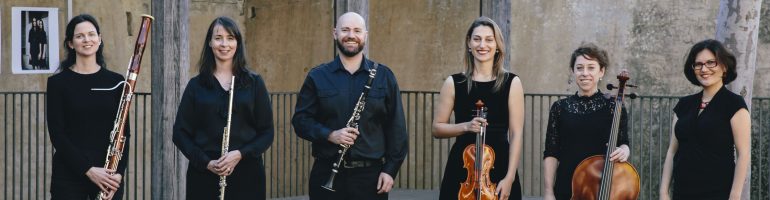
Our core ensemble of Ian Sykes (clarinet), Alison Evans (bassoon), Melissa Coleman (flute), Julia Zeltzer (french horn), Georgina Price (viola), Clare Kahn (cello) and Claire Howard Race (piano) will be returning to present an even more diverse range of works this year.

Prokofiev, Shostakovich and Khachaturian 1940

Concert 1 – Saturday 25th May, 7.30pm

The Voice of Exile

Sirius Chamber Ensemble focuses on composers known to have worked under the communist regimes in the former Soviet Union. Despite heavy censorship, fear of deportation or death, composers in this period produced some of the most profound music of the twentieth century.

Dimitri Shostakovich – Piano Trio No.2.

Sergei Prokofiev – Flute Sonata Op.94

Bohuslav Martinu – Nonet for flute, oboe, clarinet, bassoon, french horn, violin, viola, cello and bass.

Guest Artists: Angus Lindsay (oboe), Martyn Hentschel (violin), Heloise Meisel (violin), Andrew Meisel (bass).

Concert 2 – Saturday 10th August, 7.30pm

The Americas

Join Sirius Chamber Ensemble for a musical journey through the Americas. Beginning in Brazil with the wind quintet “Quintette en forme de Choros” by Heitor Villa-Lobos and then following to Argentina for “Le Grand Tango” for cello and piano by Astor Piazzolla. Venturing further north, we get a taste of the United States with a pastoral “Quiet in the Land” for flute, clarinet, cor anglais, viola and cello by Kenneth Fuchs and the Trio for clarinet, cello and piano by Robert Muczynski. To conclude is the joyous “Belle Epoque in Sud America” for wind quintet by Brazilian composer Julio Medaglia.

Concert 3 – Saturday 30th November, 7.30pm

Eastern Europe

Sirius Chamber Ensemble travels on a journey through the tumultuous history of Hungary and Czechoslovakia. The use of folk songs and national dance in the music of Béla Bartók and Antonín Dvořák inspired later composers such as György Ligeti. Sirius will premiere a new work by Nigel Ubrihien, an arrangement of Hungarian folk songs for vocalist and chamber ensemble.

Béla Bartók – “Contrasts” for clarinet, violin and piano

György Ligeti – Six Bagatelles for wind quintet

Nigel Ubrihien – new work

Antonín Dvořák – Piano Quintet No. 2 in A major, Op.81

Tickets are available for sale now at www.classikon.com

Single Tickets:

Adult $35 / Concession $25 / Child $15

3 Concert Subscription:

Adult $90 / Concession $65 / Child $30

We look forward to a great year of music making, and hope to see you at a concert soon.

Ian Sykes and Alison Evans

Sirius Chamber Ensemble

Contact us: sirius.ensemble@gmail.com
Leave a comment

Filed under Concerts

The Kitchen Review

English: Bohuslav Martinů (Martinu) ( ˈmarcɪnu...

English: Bohuslav Martinů (Martinu) ( ˈmarcɪnuː (help·info); (December 8, 1890 – August 28, 1959) was a prolific Bohemian Czech composer, who wrote six symphonies, 15 operas, 14 ballet scores and a large body of orchestral, chamber, vocal and instrumental works. (Photo credit: Wikipedia)

During the 1920s F. Scott Fitzgerald’s aptly named “Jazz Age” swept North America.  Likewise, Europe was exposed to current musical flavours and the Czech composer Bohuslav Martinu was not immune to the trends.  In 1927 Martinu wrote the 10-movement jazz ballet The Temptation of the Saintly Pot, incorporating the popular Charleston, Tango and the Foxtrot dances to complement the unlikely tale of a kitchen utensil love-triangle.  Martinu condensed the ballet into a 4-movement suite and under the new title of La Revue de Cuisine “The Kitchen Revue”, the suite was premiered in Paris in 1930.


The suite maintains the original instrumentation of the ballet; violin, cello, clarinet, bassoon, trumpet and piano.  With this combination, Martinu demonstrated the possibilities of jazz in a chamber ensemble without percussion.  In Martinu’s mind his native Slav folk songs contained a rhythmic parallel to jazz, as he observed,


“I often think of the amazingly pregnant rhythm … of our Slovak songs, of their characteristic, rhythmical, instrumental accompaniment, and it seems to me that it is unnecessary for us to have recourse to the jazz band.  Nevertheless I cannot deny the part [jazz] plays in the stream of our life … It is another question, however, how this influence should be realised.” (Quoted in Bohuslav Martinu His Life and Works, Safranek, M., London:  Alan Wingate, 1962, p.117).


In La Revue de Cuisine, Martinu has realised the jazz influence through such features as the Dixie-style clarinet writing, the shifting meters of the piano’s rhythmic role, the jazz band colour of the muted trumpet, and the witty soloistic interchanges between instruments.

– Notes by Claire Howard Race

Sirius Chamber Ensemble and guest artists will perform Saturday 10th November 2012, 7.30pm at the St Philip’s Church.

Tickets available on trybooking.com or at the door.

1 Comment

Filed under Concerts

Brahms Clarinet Quintet

Johannes Brahms

We look forward to seeing you at our last concert for 2012 on Saturday 10th November, 7.30pm at St Philip’s Church, York Street, CBD. On the program are chamber works for strings, winds and piano by Martinu, Arnold, Brahms as well as the premiere of Mestizo Dances by Nigel Ubrihien. 


Johannes Brahms (1833-1897) – Clarinet Quintet in B minor, Op. 115

Brahms is one of the most celebrated composers of the Romantic period. His musical style perfectly unites strong links with the clear structural forms of the Classical masters with the rhythmic, harmonic and melodic invention that allows the emotional expression of a true Romantic artist. Nearly all of his compositions are considered to be masterpieces in their genre, and are now central to the repertoire of orchestras and ensembles worldwide.


Brahms’ Clarinet Quintet was composed in 1891, a year after he resolved to retire from musical composition. This resolve was quickly forgotten when he heard a performance of a Weber concerto by the clarinetist Richard Mühlfeld (1856-1907) who was a musician of extreme technical facility, musicality and expression. So inspired was Brahms that he quickly began work on two chamber music compositions that featured the clarinet, a trio and a quintet, and both these works are now considered to be amongst the finest of all Brahms’ chamber compositions.


The quintet is often described as autumnal or nostalgic, due to its B minor key, generally subdued mood and its integrated composition. Unlike some works written with similar instrumentation where the strings merely accompany the solo clarinet line, in Brahms’ quintet he writes five equal voices. The first movement is the longest and has a feeling of gentle sadness and an elegiac sweetness. The second movement alternates a reflective lullaby with a rhapsodic, gypsy-like middle section, which features spectacular clarinet runs accompanied by shimmering string writing. After a gentle opening the third movement moves into a quick scherzo, and then the concluding movement is a set of variations on an original theme. The quintet finishes with a coda that uses material from the very opening of the work, the most explicit example of the thematic and harmonic integration that does in fact permeate the entire composition.


The quintet was premiered with Mühlfeld on the clarinet, and it has been said that no subsequent chamber work for clarinet has ever matched this masterpiece.


– notes by Clare Kahn


Leave a comment

Filed under Concerts

Sirius Chamber Ensemble – Mestizo Dances

Josephine Baker dancing the Charleston at the ...

Josephine Baker dancing the Charleston at the Folies Bergère, Paris — Revue Nègre Dance (Photo credit: Wikipedia)

Sirius Chamber Ensemble concludes its 2012 concert series on a bright note, combining well-loved masterpieces, a jazz ballet suite and the premiere of a new composition written especially for the ensemble. Sydney-based composer, arranger and performer Nigel Ubrihien composed the septet Mestizo Dances after his travels in Mexico and is written for the unusual mix of wind and string instruments – flute, clarinet, bassoon, french horn, violin, viola and cello.

To continue the dance theme of the program, Bohuslav Martinu’s ballet suite La Revue de Cuisine based on the bizarre story of kitchen utensils dancing and falling in love on stage. The composition scored for a sextet – clarinet, bassoon, trumpet, violin, cello and piano – explores the popular jazz styles of the 1920’s.

Clarinetist Ian Sykes will be joined by the Bancroft Quartet to perform Brahms’ Clarinet Quintet Op.115. One of Brahms’ later works modelled on Mozart’s Quartet for the same instrumentation; the Quintet is regarded to be one of his greatest compositions for chamber ensemble.

Also on the program will be the lesser-known Trio for flute, viola and bassoon by Malcolm Arnold.


When: Saturday 10th November, 7.30pm

Where: St Philip’s Anglican Church, 3 York St, Sydney

Tickets: $15-$35

Bookings: http://www.trybooking.com/BQPK

Leave a comment

Filed under Concerts